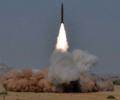
Pakistan on Thursday successfully test-fired a ballistic missile capable of carrying nuclear and conventional warheads to targets as far as 1,500 kilometres, bringing many Indian cities under its range.
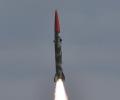
Pakistan on Tuesday successfully test-fired a short-range surface-to-surface ballistic missile Hatf III (Ghaznavi), capable of carrying nuclear and conventional warheads to a range of 290 kilometres, that could cover parts of India.
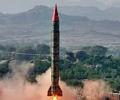
Pakistan on Wednesday tested the Hatf-V nuclear-capable ballistic missile with a range of 1,300 km, with the military saying that the launch was aimed at strengthening the country's deterrence capability.

Although extensive air attacks have been carried out to destroy most of Iran's defence capabilities, the latter's resilience and sustenance during the war clearly indicate that the US landing force would encounter severe resistance in the operation, explains Commodore Venugopal Vengalil (retd).

The 2.3 million strong People's Liberation Army, the world's largest, adopts a more aggressive posture with massive structural revamp.
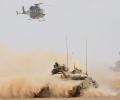
'Offensive operations to capture objectives across the LoC to eliminate terrorist launch pads and deny the use of the most dangerous routes of infiltration, are likely to be limited to brigade-level attacks.' 'These limited operations are unlikely to escalate to war across the international boundary,' says Brigadier Gurmeet Kanwal (retd).

'The leverage created by the Indian military must not be lost.'
India has experienced hands and will emerge with flying colours, declares Inspector General Gurdip Singh Uban (retd).
 © 2026 Rediff.com - Advertise with us - Disclaimer - Privacy Policy - Sitemap - Feedback - About us - Terms of use - Grievances